Why do we assign
gender to objects?
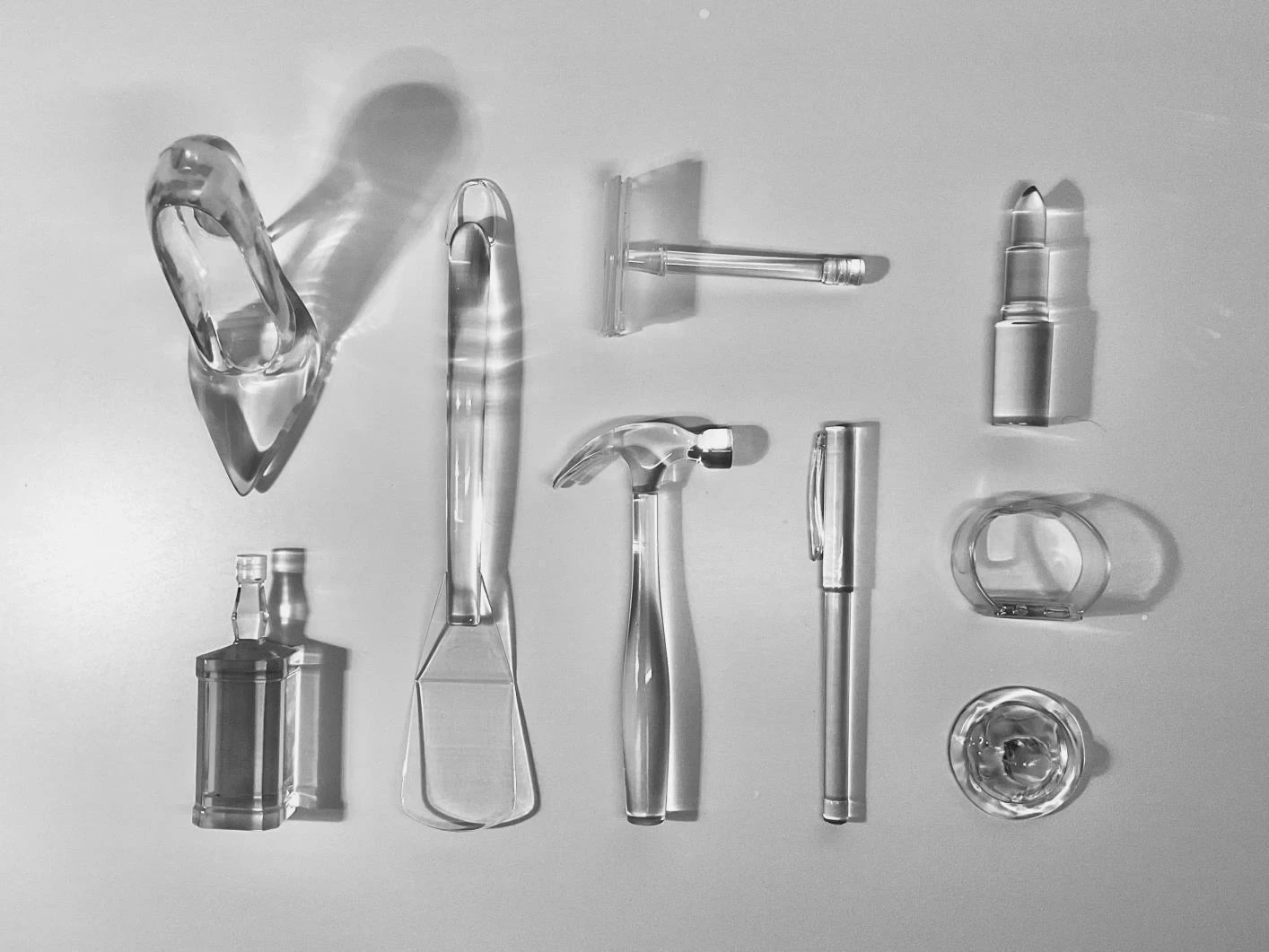
Everyday objects often carry gendered expectations. Their colors, materials, functions, and familiar contexts can shape how we perceive them.
Gender begins with these associations: when familiar colors and material cues are softened but recognizable forms remain, do we still interpret and categorize objects through gender?
Familiar forms.
Different cues.
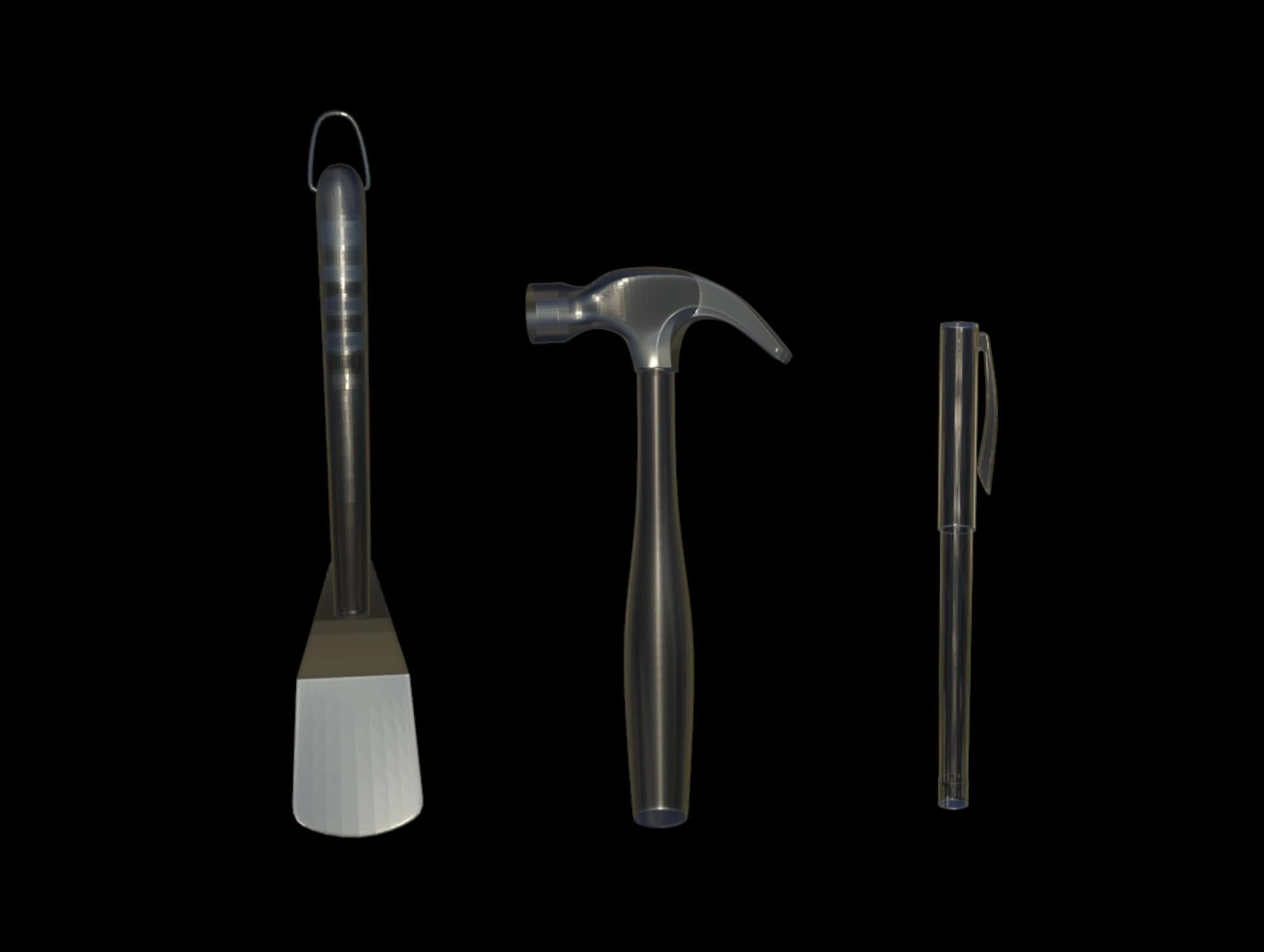
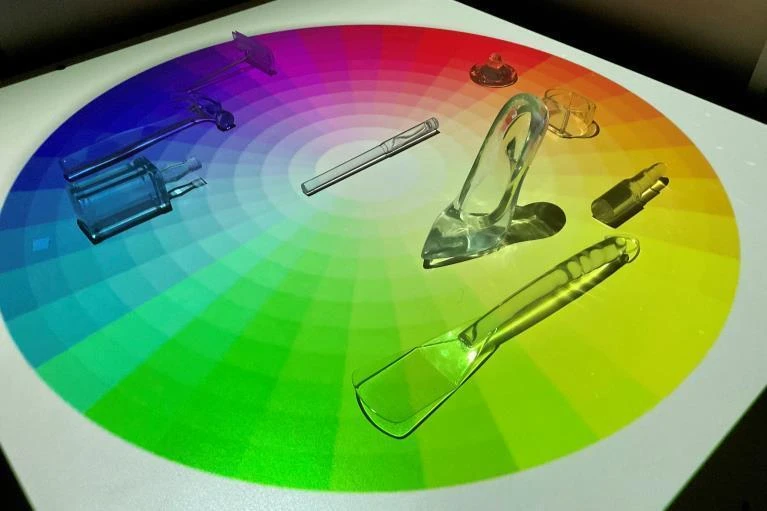
I recreated everyday objects as 3D-printed clear resin models, giving otherwise different objects a shared material quality.
Transparency does not erase an object’s meaning. It preserves its form while changing the visual cues available to the viewer.
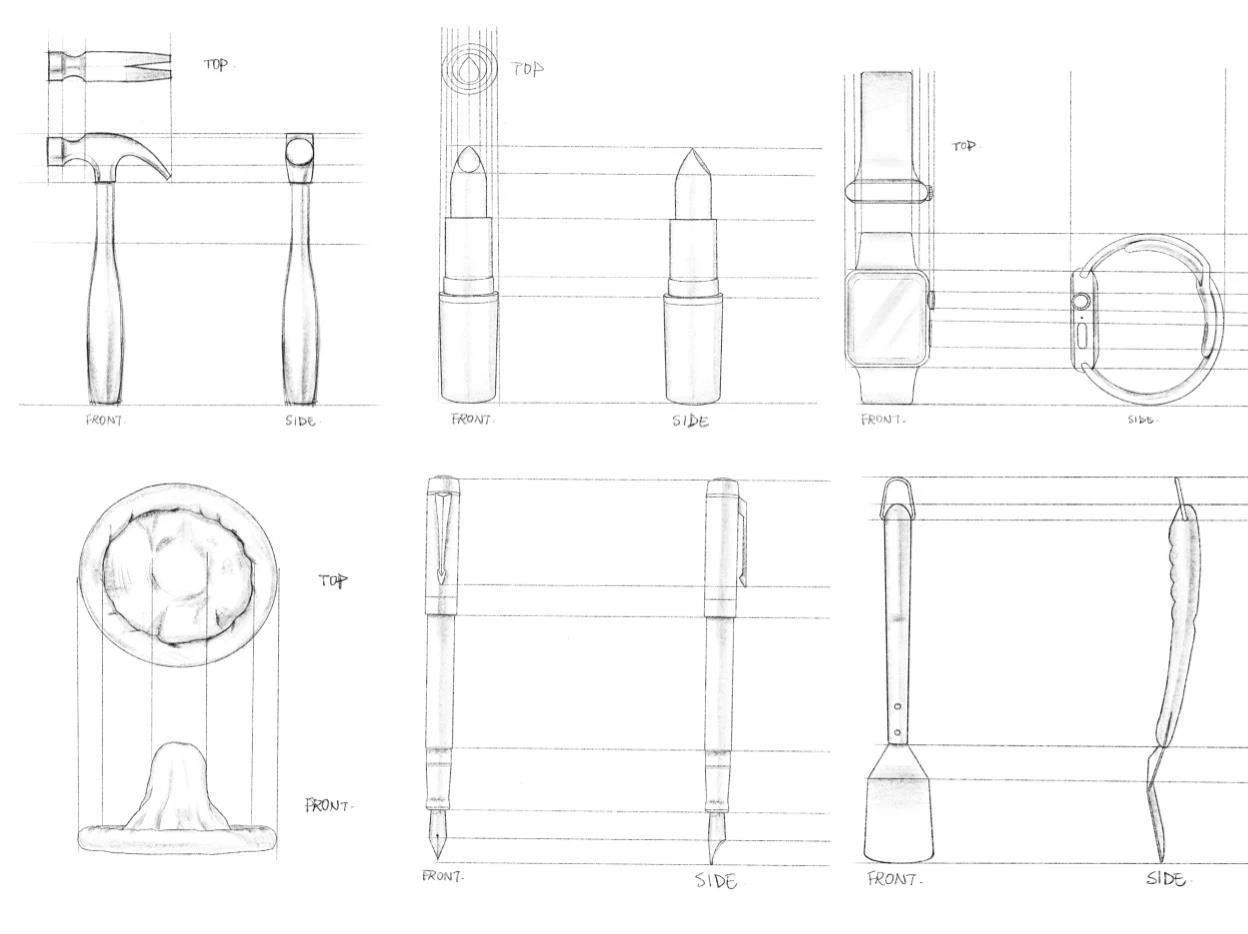
From outline to object
Sketches explore the forms and structures of the objects. Through 3D printing, these studies become physical pieces that visitors can pick up, examine, and place.
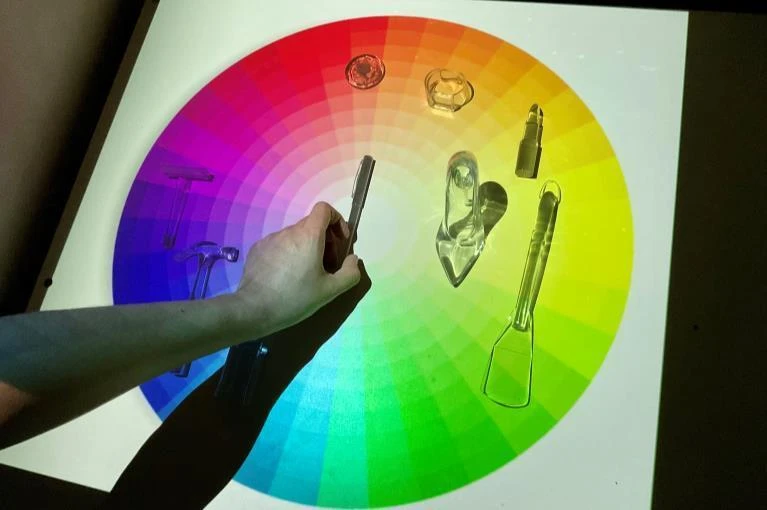
Where would
you place it?
Visitors choose a 3D-printed object and place it on the color they associate with it. Each placement turns a personal perception into a visible spatial relationship.
- 01
Choose
Pick up an object and observe its form.
- 02
Associate
Consider which color you associate with it.
- 03
Place
Place the object on your chosen color.
Making perceptions
visible
Transparent objects and a color spectrum form the installation. By placing the objects, visitors contribute their own interpretations of familiar things.
This participatory format opens up questions about how we categorize objects and the gender stereotypes embedded in those choices.
Each placement opens
another question.
In future iterations, I would like to record where different visitors place the objects, exploring how their interpretations vary.
Which associations come from an object’s form, and which come from lived experience? The installation offers a starting point for continuing this inquiry.