Rethinking the everyday book cover
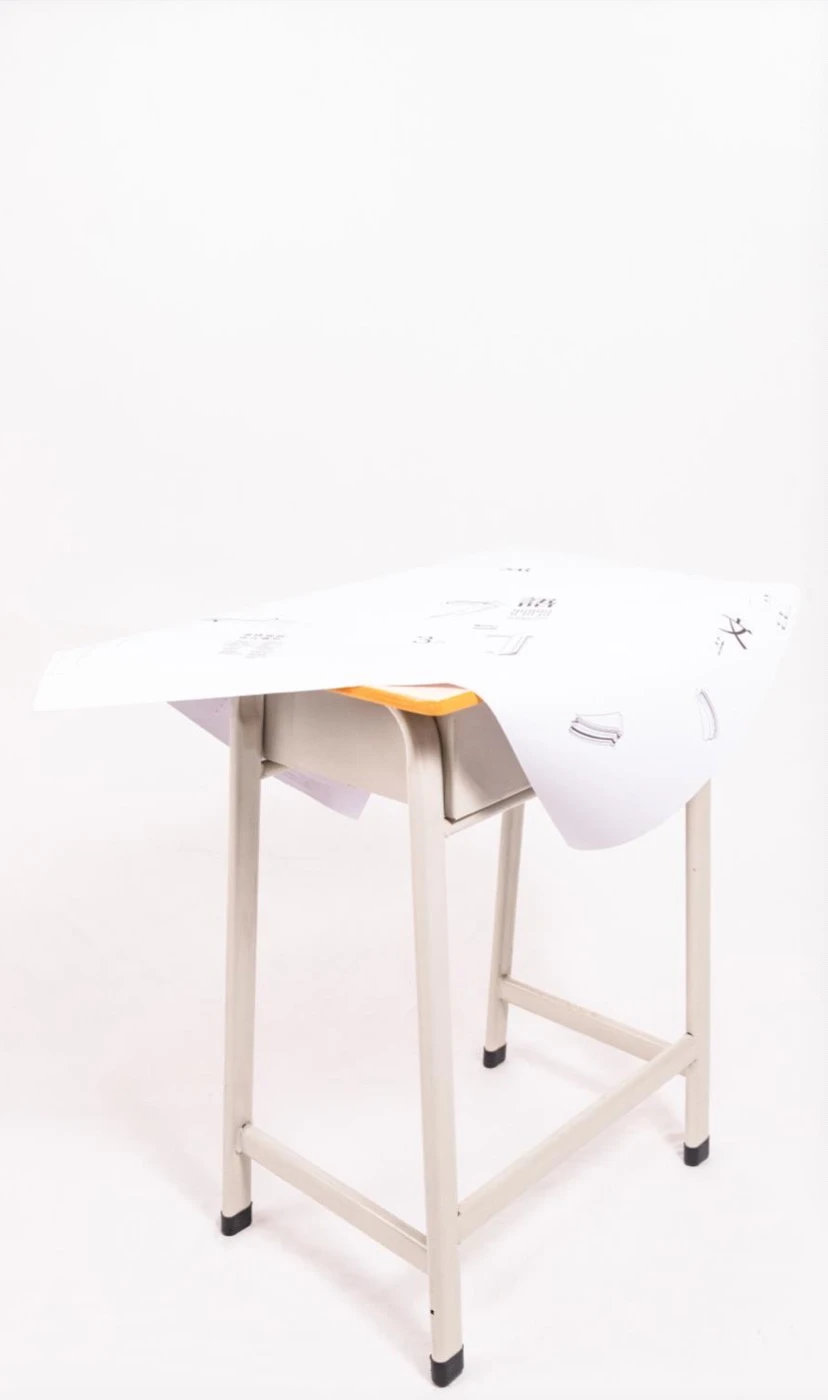
Paper Said explores a paper alternative to plastic textbook covers. Beyond changing the material, the project asks how a cover can become something students want to make, recognize, and use.
A questionnaire received 156 responses, of which 134 were valid. The feedback recorded in the portfolio highlights parents’ interest in environmental concerns and safety, alongside students’ interest in appearance and playfulness.
Fold, protect, and store
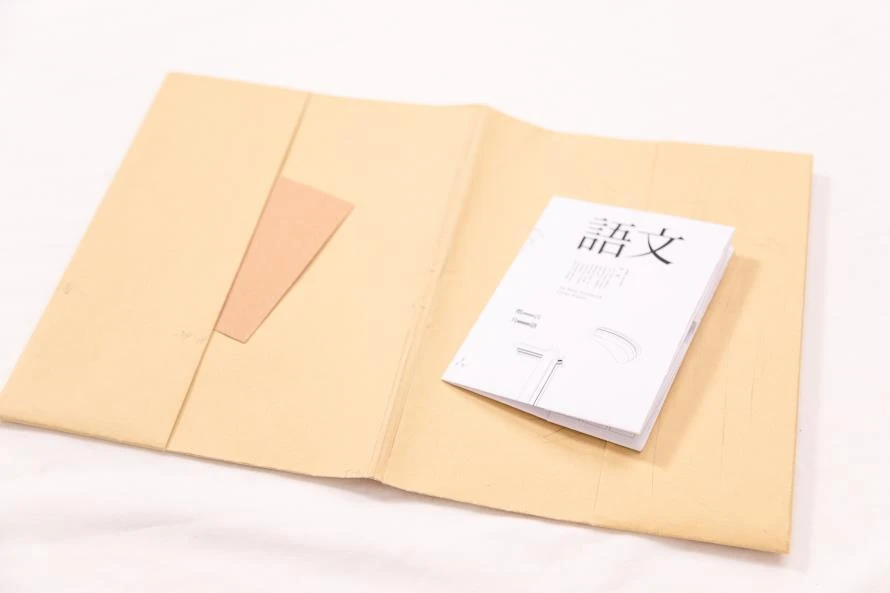
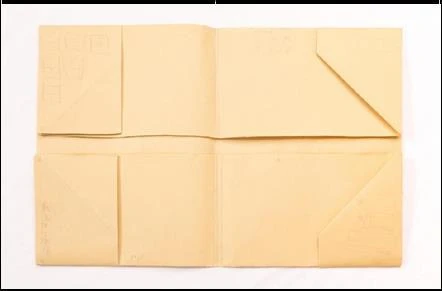
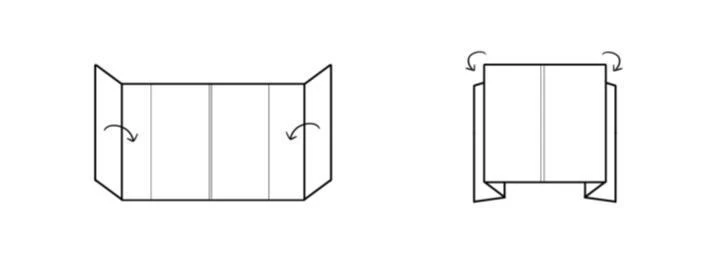
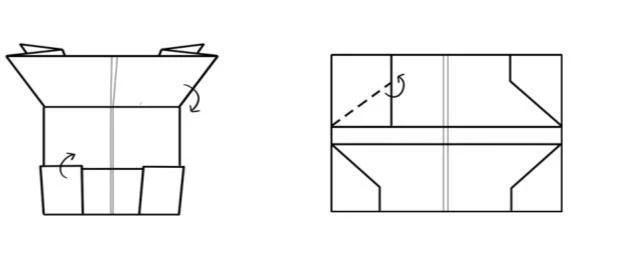
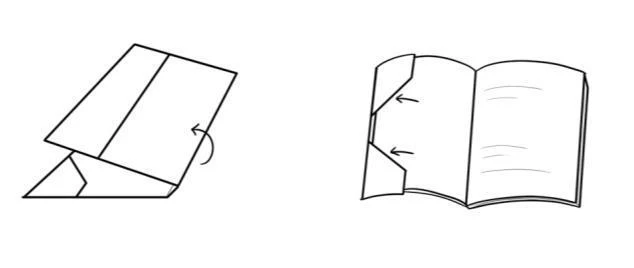
The cover wraps around a textbook through a sequence of folds. An inner pocket provides space for small items, bringing storage into an otherwise simple protective layer.
Paper prototypes explore how fold lines, corners, and layers can work together in daily use.
Characters, taken apart
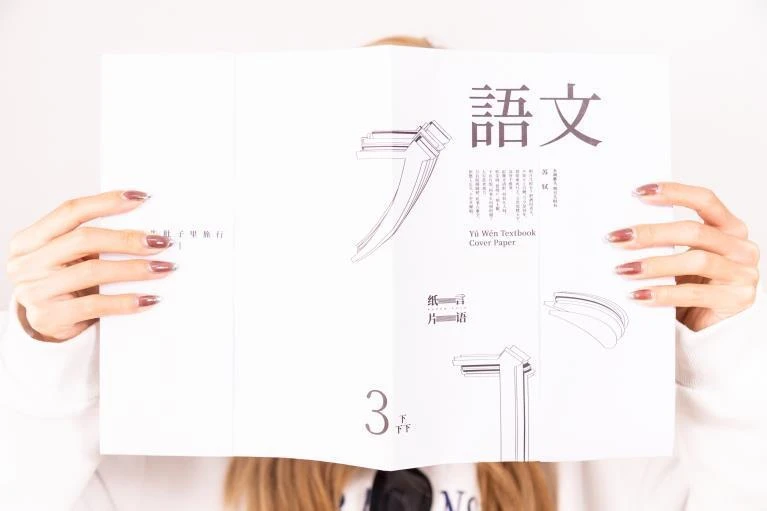
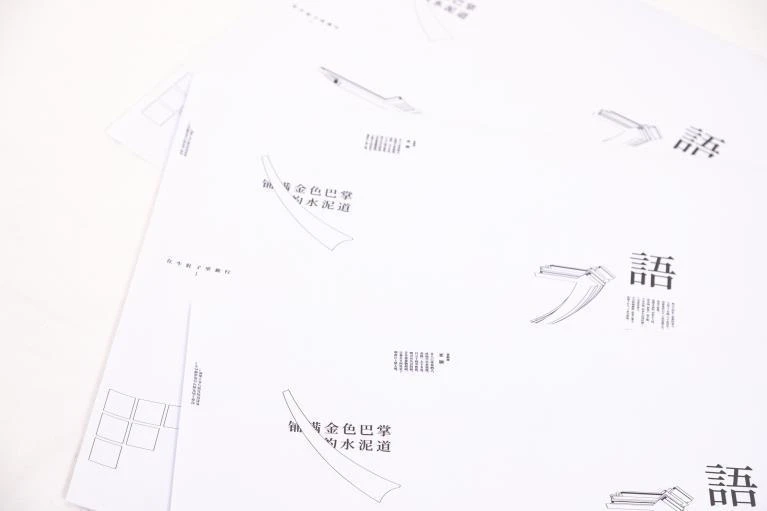
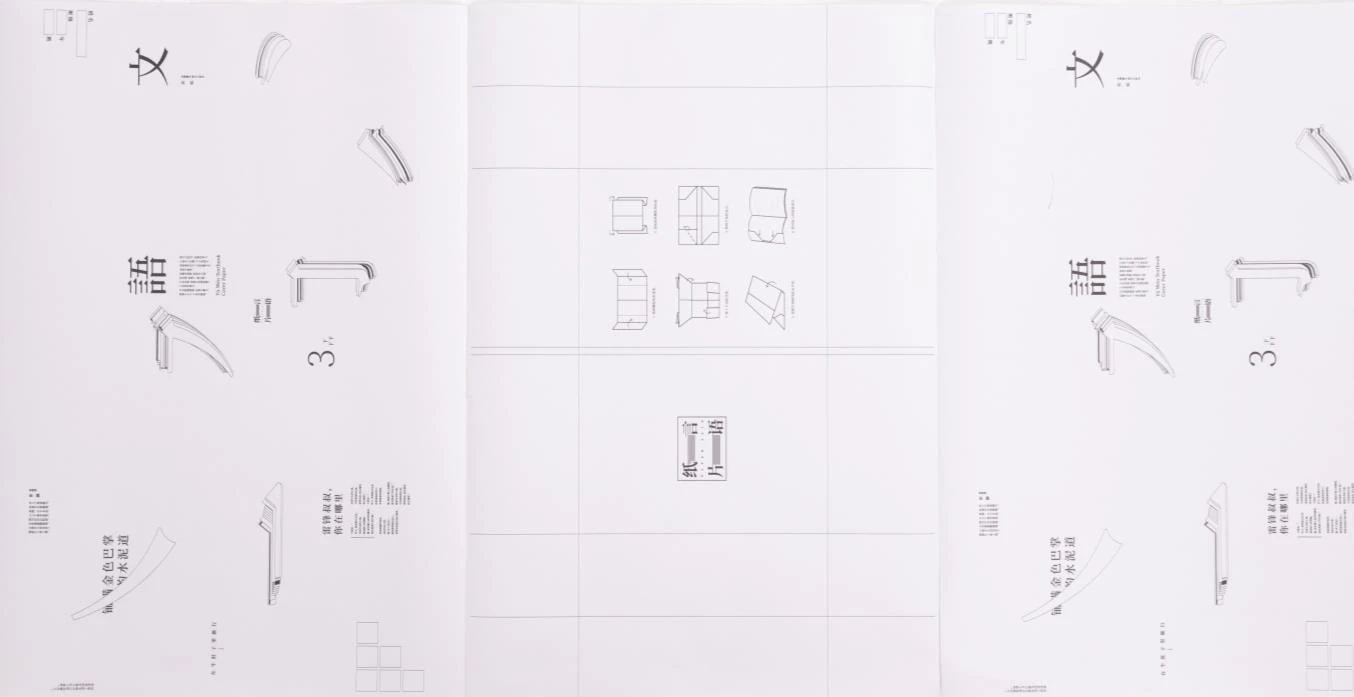
The Chinese-language textbook edition uses character strokes as graphic elements. The strokes interact with the folded surface, inviting students to notice and recombine familiar forms.
The visual system connects the cover to the subject of the book while giving the act of wrapping it a playful dimension.
A design that unfolds
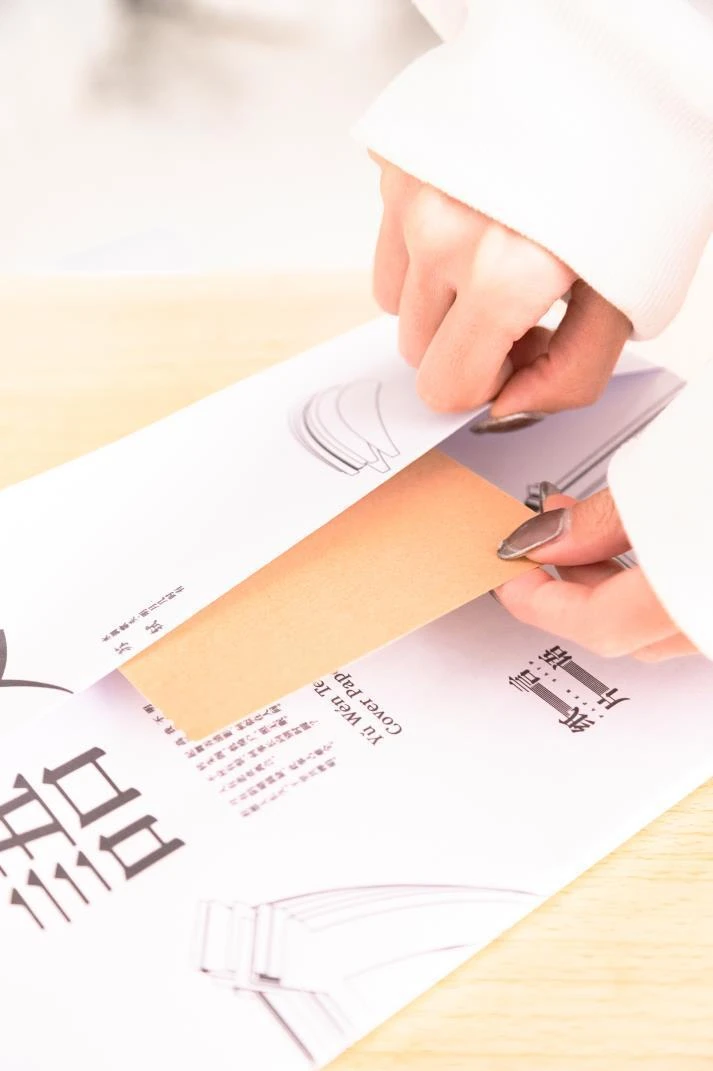
Fold in the sides, fold back along the guides, bring in the top and bottom edges, shape the corners, and form the spine before inserting the textbook.
Designed to be used
Future testing could explore durability, how independently students can complete the folds, and whether the cover remains appealing over time. Reducing the use of plastic covers is the design intention; the prototype is a starting point for examining that possibility.
Identity and presentation
The project identity and an additional view of the printed design.